8 Best CAPTCHA Proxies for Web Scraping in 2026
Web scraping becomes more difficult when websites detect repeated requests, unstable sessions, or inconsistent network identities. According to Akamai, the commerce industry recorded more than 25 billion AI bot requests during a two-month observation period, highlighting the scale of automated traffic that modern anti-bot systems must evaluate.
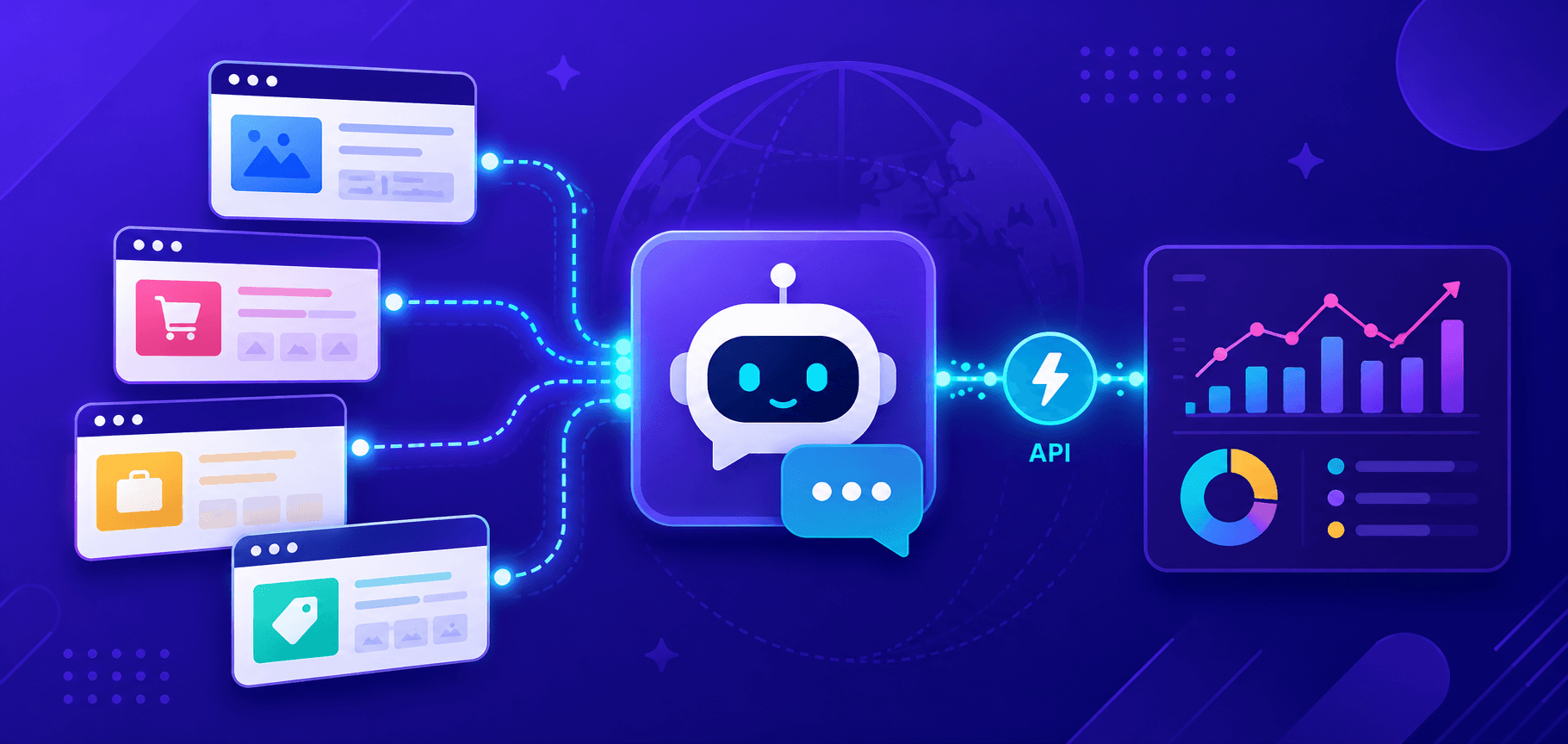
CAPTCHA proxies help reduce verification challenges by distributing requests across alternative IP addresses, maintaining consistent location and session signals, and replacing poorly performing exits. This guide compares eight providers by proxy type, rotation controls, geo-targeting, CAPTCHA handling, and entry pricing.
What Are CAPTCHA Proxies?
CAPTCHA proxies are residential, mobile, ISP, or datacenter proxies used to reduce verification challenges during web scraping. They distribute requests across alternative IP addresses, limit repeated traffic from one network identity, and make it easier to maintain consistent geographic and session signals.
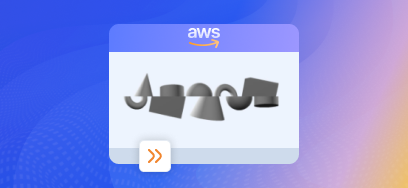
They differ from CAPTCHA solvers. A proxy attempts to prevent challenges through stronger IP reputation and better request distribution. Once an image, token, or browser-based CAPTCHA appears, the scraper may still require a web unblocker, scraping API, or external solving service.
How Do CAPTCHA Proxies Reduce Blocks?
CAPTCHA proxies address network patterns that commonly trigger anti-bot systems. Their effectiveness depends on how traffic is distributed, when IPs rotate, and whether related requests maintain a consistent browsing identity.
Request Distribution
Rotating proxies spread independent requests across multiple addresses instead of concentrating the entire scraping workload on one IP. This reduces repeated activity from each address and limits exposure to per-IP request thresholds.
Stable Multi-Page Sessions
Frequent rotation is not suitable for every workflow. Sticky sessions preserve the same IP during pagination, shopping-cart checks, localized searches, and other multi-step processes where an unexpected identity change could trigger additional verification.
Controlled IP Allocation
Private or target-based allocation reduces overlap between customers working on the same protected websites. This gives scraping teams more control over the recent reputation of the IPs used for recurring collection.
What Makes a Good CAPTCHA Proxy?
Advertised pool size provides only a partial view of performance. A smaller pool of well-matched IPs may deliver more successful responses than a larger network with weak session controls, poor reputation, or excessive target overlap.
The most important evaluation criteria include:
- IP Quality: Clean residential or mobile IPs should provide stable responses and limited overlap with other users.
- Rotation Control: Per-request rotation suits independent requests, while sticky sessions support logins and multi-page workflows.
- Automatic Replacement: Failed, blocked, or unavailable IPs should be replaced without changing proxy credentials.
- Targeting and Scale: Precise location filters and sufficient concurrent connections help maintain consistent performance.
- Cost Efficiency: Compare the total cost per successful request, including failed attempts, retries, and CAPTCHA-solving fees.
How Do the Best CAPTCHA Proxy Providers Compare?
The best provider depends on target difficulty and workflow design. The comparison below focuses on residential entry pricing, rotation flexibility, targeting depth, and whether the platform offers a managed tool for more difficult anti-bot systems.
1. Live Proxies
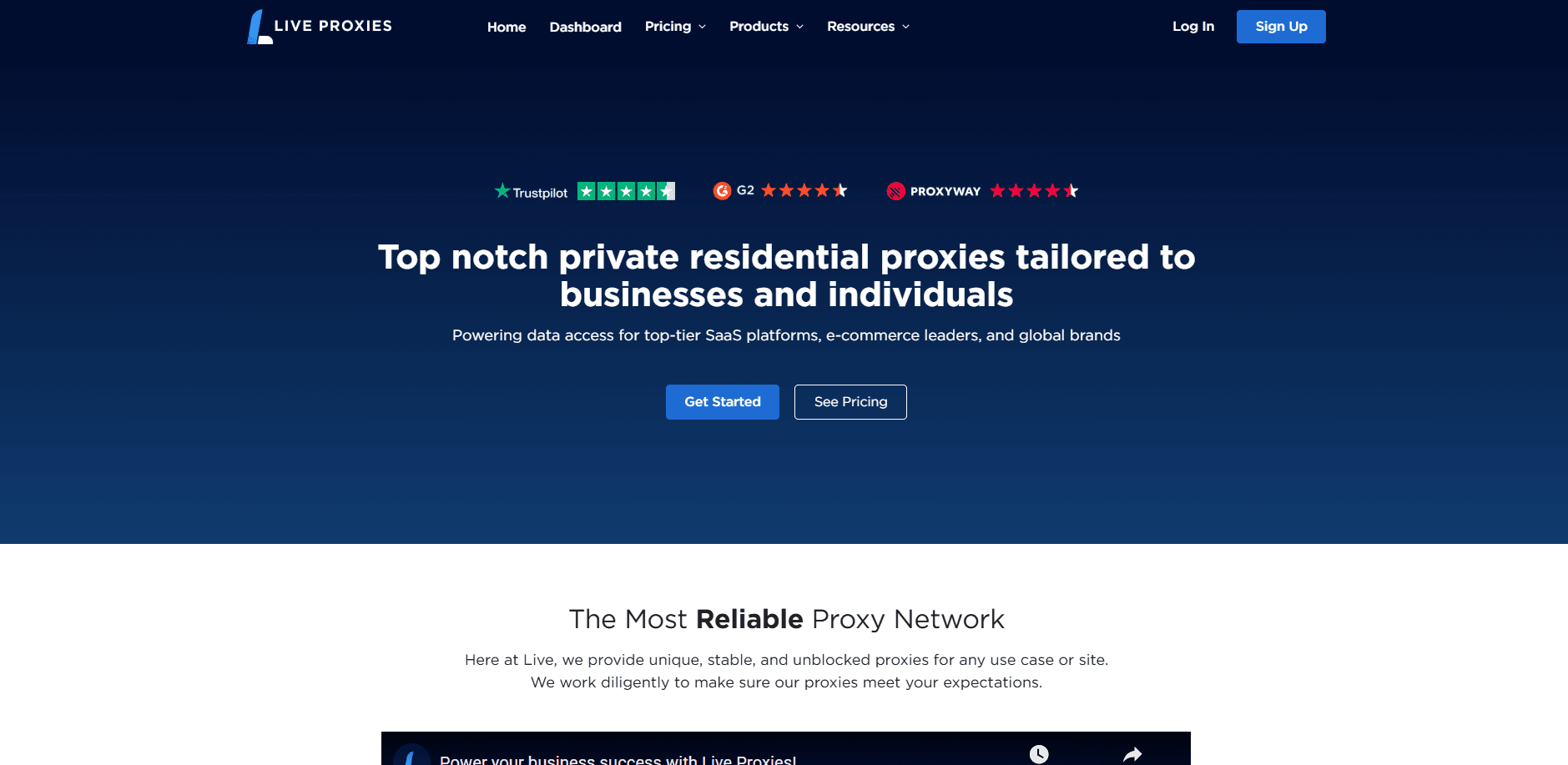
Live Proxies is the best overall choice for recurring scraping against protected ecommerce, advertising, and monitoring targets. Its strongest advantage is private IP allocation, which makes its private proxies more controlled by reducing overlap with other customers and supporting cleaner long-term routing.
The platform combines mobile and residential rotating proxies with sticky sessions up to 24 hours, country, city, and ASN targeting, unlimited threads, API access, and HTTP and SOCKS5 support. This makes it a strong fit for scalable scraping workflows that require precise location control and stable session continuity.
CAPTCHA Handling
- Rotation and Session Controls: Users can rotate IPs for independent requests or preserve the same address with sticky sessions lasting up to 24 hours.
- IP Replacement: When a residential peer disconnects, another active address can take its place within the rotating pool.
- Web Unblocker or Scraping API: The service provides API access and proxy integration rather than an all-in-one managed anti-bot API.
- External Solver Requirement: An external solver may still be necessary when the target presents an active image, token, or browser challenge.
Best Scraping Use Cases
- Ecommerce Monitoring: Track prices, inventory, promotions, and product availability across recurring retailer and marketplace targets.
- Ad Verification: Check regional campaigns, creatives, and landing pages while preserving consistent location signals.
- Continuous Data Collection: Support long-running market research and public-web monitoring with unlimited threads, API access, and HTTP or SOCKS5 connectivity.
2. Oxylabs
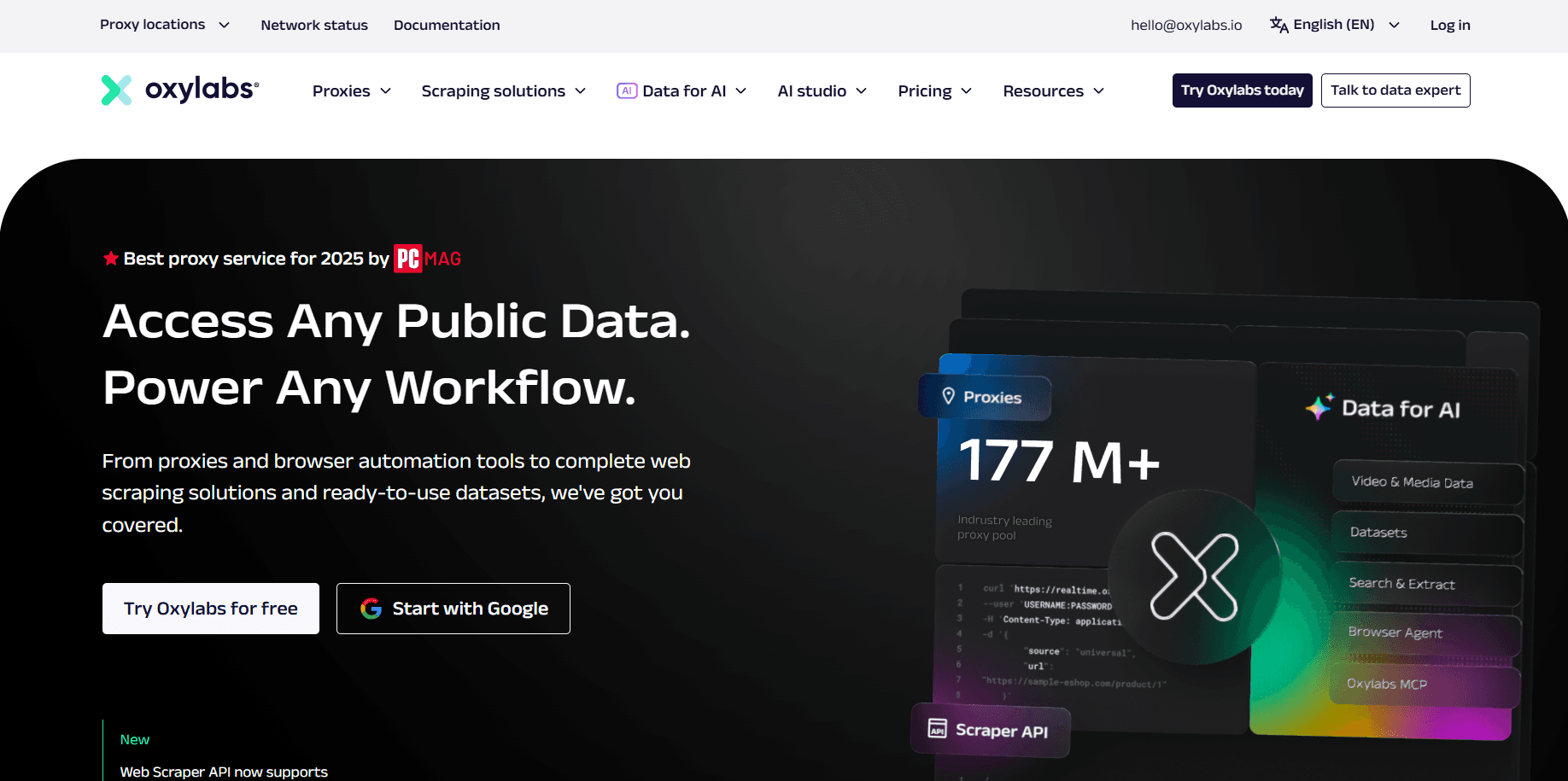
Oxylabs is built for enterprise-scale scraping across marketplaces, search engines, retailers, and other complex targets. Its portfolio includes residential, mobile, ISP, and datacenter proxies for workloads with different speed, trust, and session requirements.
Its main CAPTCHA-resistant advantage is Web Unblocker, which combines proxy rotation, retries, browser fingerprints, session management, and JavaScript rendering. This makes it suitable for high-volume projects facing advanced anti-bot systems.
CAPTCHA Handling
- Rotation and Session Controls: Residential IPs rotate automatically, while session IDs preserve one IP for related requests.
- IP Replacement: New requests can move through another address when rotation is enabled instead of remaining tied to one weak exit.
- Web Unblocker or Scraping API: Web Unblocker adds JavaScript rendering, session management, and automated access through one endpoint.
- External Solver Requirement: Direct proxy users may need an external solver, while managed products are designed to handle more anti-bot complexity internally.
Best Scraping Use Cases
- Marketplace Intelligence: Collect pricing, seller, listing, and availability data across large product catalogs.
- Global SERP Collection: Retrieve localized search results using state, city, ZIP, coordinate, and ASN targeting.
- Enterprise Data Pipelines: Support high concurrency and repeated public-data collection across many regions.
3. Decodo
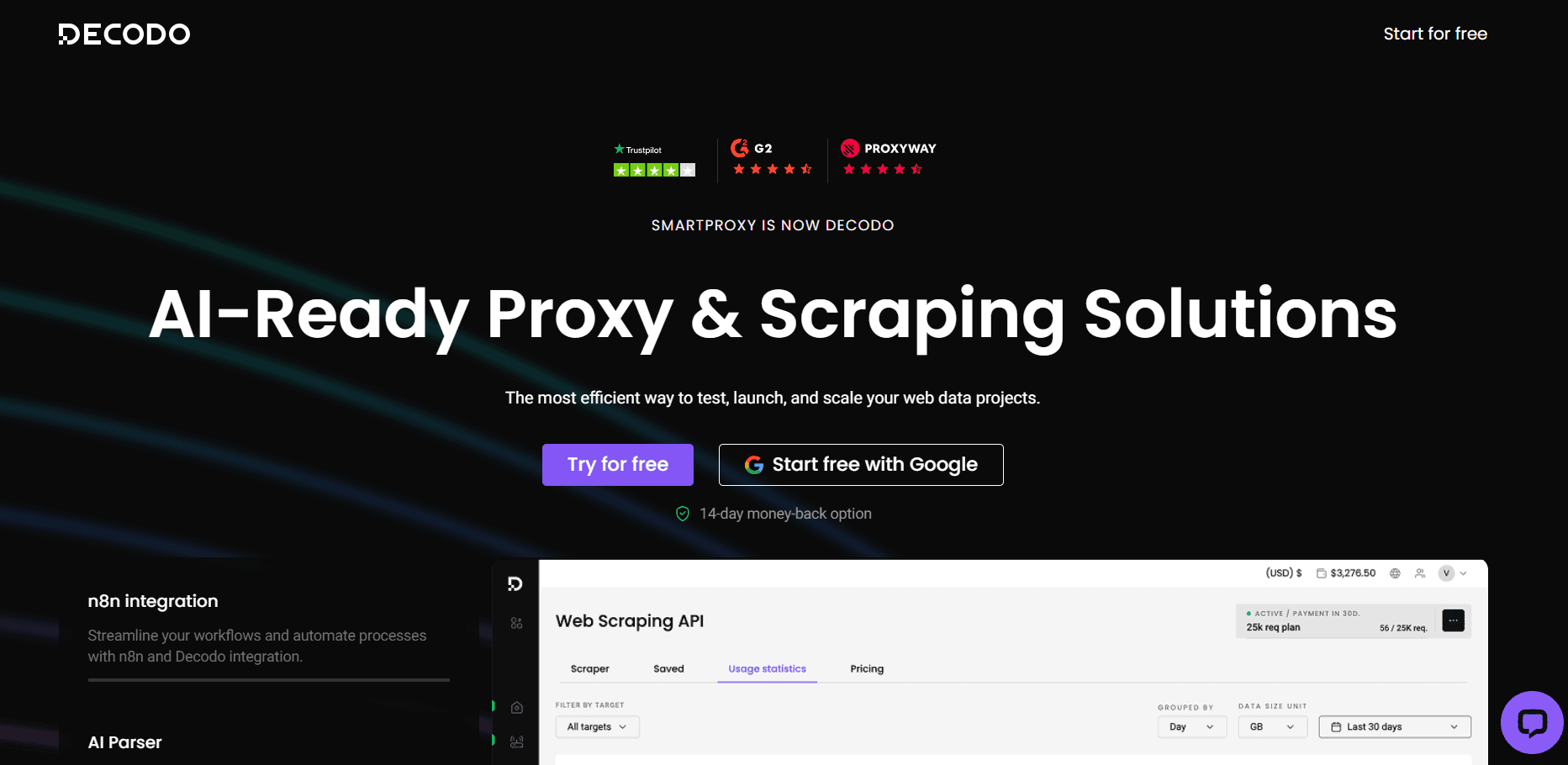
Decodo suits developers who want both direct proxy access and managed scraping tools. It offers residential, mobile, ISP, and datacenter proxies with flexible rotation, sticky sessions, and detailed geo-targeting.
Site Unblocker and Web Scraping API handle proxy selection, retries, JavaScript rendering, and CAPTCHA-related blocks. Teams can therefore use standard proxies for easier pages and managed tools for more protected targets.
CAPTCHA Handling
- Rotation and Session Controls: Residential connections support rotating requests and persistent sessions for stateful collection.
- IP Replacement: Managed products rotate routes automatically when a request cannot be completed through the current path.
- Web Unblocker or Scraping API: Site Unblocker offloads CAPTCHAs and IP blocks, while Web Scraping API handles rendering, rotation, and extraction.
- External Solver Requirement: Direct proxy users may require one, but Site Unblocker is designed to manage active access challenges.
Best Scraping Use Cases
- Ecommerce Scraping: Collect product, price, inventory, and seller information from dynamic retail pages.
- Travel Data: Monitor fares, accommodation availability, and location-sensitive offers.
- Search Data: Gather localized results with country, city, ZIP, or ASN controls.
4. SOAX
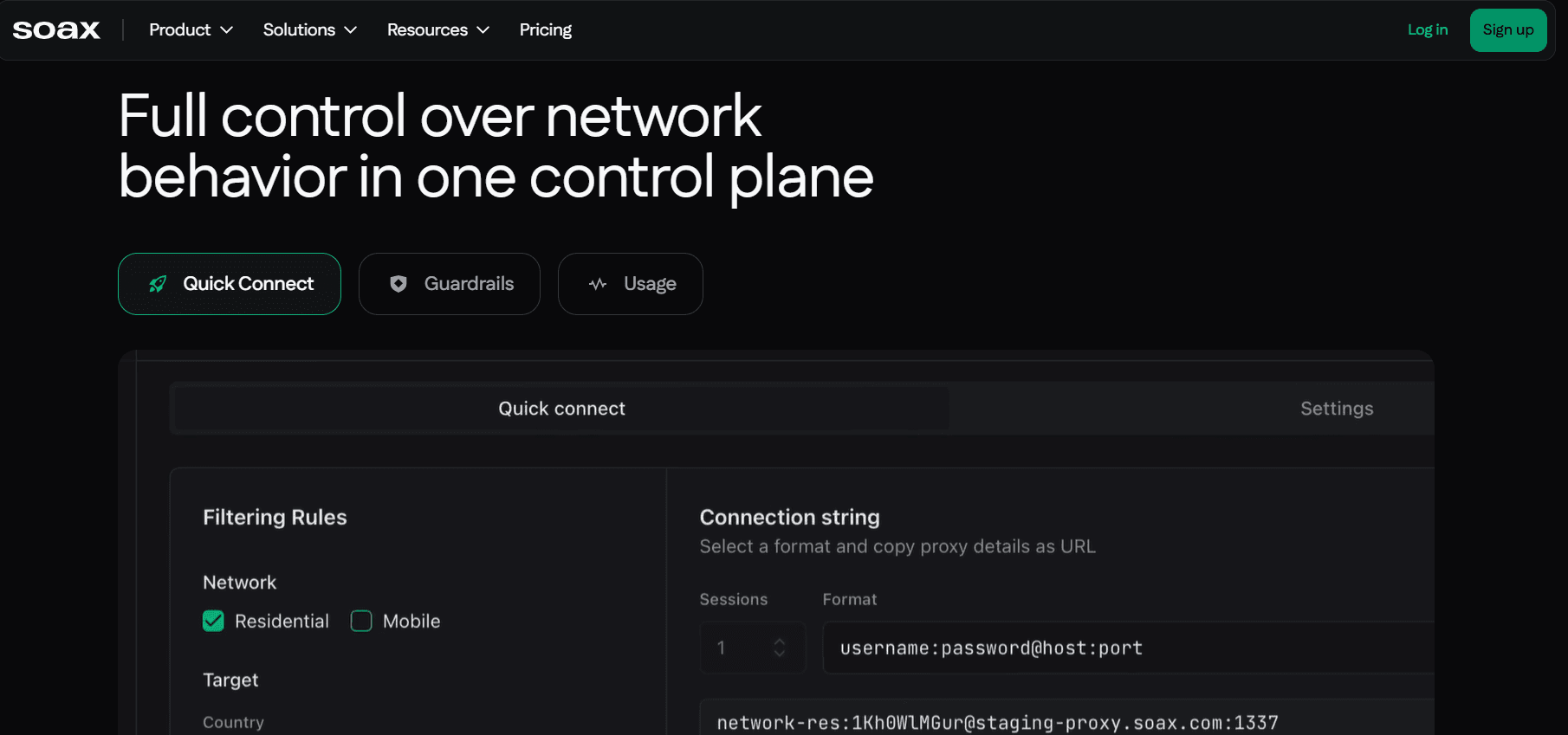
SOAX is best suited to localized scraping where accurate location signals affect prices, search results, advertisements, or available content. It provides residential, mobile, ISP, and datacenter proxies with flexible session controls and detailed geographic targeting.
Its Web Data API handles proxies, cookies, headers, JavaScript, browser fingerprints, CAPTCHAs, and web application firewalls. This makes SOAX particularly effective for regional monitoring and location-sensitive data collection.
CAPTCHA Handling
- Rotation and Session Controls: Plans include rotating sessions, sticky sessions, and customizable IP refresh intervals.
- IP Replacement: Rotation can assign another exit when a new request or refresh interval begins.
- Web Unblocker or Scraping API: Web Data API handles WAFs, CAPTCHAs, JavaScript, and dynamic pages.
- External Solver Requirement: A separate solver is generally unnecessary when Web Data API successfully handles the requested page.
Best Scraping Use Cases
- Localized Price Monitoring: Compare products and offers across cities, regions, and storefronts.
- Regional SERP Collection: Gather search results that reflect specific user locations.
- Ad Verification: Confirm whether campaigns and sponsored placements appear correctly in target markets.
5. IPRoyal
IPRoyal is a practical option for small and mid-sized scraping projects that need flexible pricing and several proxy types. Its portfolio includes residential, mobile, ISP, and datacenter proxies with timed rotation and long sticky sessions.
For harder targets, Web Unblocker manages IP selection, retries, browser fingerprints, geo-restrictions, and CAPTCHA challenges. This allows users to start with direct proxies and add managed handling only when required.
CAPTCHA Handling
- Rotation and Session Controls: Users can request a new IP immediately, rotate every 1, 10, or 30 minutes, or retain one IP for longer tasks.
- IP Replacement: The dashboard and API allow users to replace the current residential address on demand.
- Web Unblocker or Scraping API: Web Unblocker adds automated unblocking for targets that need more than direct proxy routing.
- External Solver Requirement: Proxy-only setups may still require an external solver after an active CAPTCHA appears.
Best Scraping Use Cases
- Occasional Product Checks: Monitor selected prices, availability, or listing changes without buying a large traffic package.
- Regional Research: Collect local content through country, state, and city targeting.
- Smaller Protected Sites: Run moderate scraping jobs that benefit from long session continuity.
6. Webshare
Webshare focuses on self-service proxy management for developers building and controlling their own scraping systems. It offers rotating residential, static ISP, and datacenter proxies through a straightforward dashboard and endpoint generator.
Users can configure rotating or sticky residential connections and select country or city locations. Webshare is strongest for teams that prefer to manage request pacing, retries, and external CAPTCHA solving inside their own applications.
CAPTCHA Handling
- Rotation and Session Controls: The Endpoint Generator lets users select rotating or sticky sessions for generated residential connections.
- IP Replacement: Rotating endpoints assign another address without requiring the crawler to replace its main gateway.
- Web Unblocker or Scraping API: No dedicated managed unblocker is positioned as the primary product.
- External Solver Requirement: Active challenges must be handled through the scraper or an external solving service.
Best Scraping Use Cases
- Developer-Managed Crawlers: Integrate residential endpoints into scripts with internal retry and pacing logic.
- Testing and Prototyping: Test success rates on selected targets before moving to larger plans.
- Basic Market Research: Collect public product, pricing, or regional visibility data.
7. Rayobyte
Rayobyte provides residential, ISP, and datacenter infrastructure for teams working across targets with different protection levels. Its broad product range allows users to balance residential trust, stable ISP sessions, and datacenter speed.
Residential proxies support per-request rotation, sticky sessions, multiple protocols, and detailed geo-targeting. Soft sessions can also replace disconnected IPs, helping long-running scraping jobs maintain availability.
CAPTCHA Handling
- Rotation and Session Controls: Residential addresses rotate by default on each request, with configurable sticky sessions from one to 60 minutes.
- IP Replacement: Soft sessions may assign another IP if the selected peer disconnects, while strict sessions return an error instead.
- Web Unblocker or Scraping API: The platform primarily focuses on proxy infrastructure.
- External Solver Requirement: A separate solver may be needed when the selected IP and request configuration still trigger a challenge.
Best Scraping Use Cases
- High-Volume Crawling: Use residential or datacenter routes according to the protection level of each target.
- Market Research: Collect localized public data with country, state, city, ZIP, or ASN selection.
- Moderately Protected Websites: Use sticky residential sessions where continuity matters more than constant rotation.
8. Infatica
Infatica is suited to international scraping projects that require broad proxy coverage and flexible location controls. Its portfolio includes residential, mobile, ISP, and datacenter proxies for global ecommerce, search, and market-monitoring tasks.
Its Web Scraper API adds residential IP rotation, JavaScript rendering, browser headers, retries, and CAPTCHA handling. This gives teams a managed option for difficult pages while preserving direct proxy access for simpler targets.
CAPTCHA Handling
- Rotation and Session Controls: The Proxy API Tool supports rotation settings, sessions, and location parameters.
- IP Replacement: Rotating mode assigns another available exit according to the selected session configuration.
- Web Unblocker or Scraping API: Web Scraper APIs add residential proxy rotation, JavaScript rendering, browser headers, and request optimization.
- External Solver Requirement: Direct proxy users may still need one, while the managed scraper handles more anti-bot work internally.
Best Scraping Use Cases
- International Ecommerce: Collect localized prices, stock information, reviews, and seller data.
- Global SERP Tracking: Retrieve search results and advertisements across multiple geographic markets.
- Market Monitoring: Support recurring competitive-intelligence and product-research workflows.
Which Proxy Type Handles CAPTCHAs Best?
No proxy type is strongest for every target. The right choice depends on network origin, session stability, location consistency, request volume, and cost. More protected websites may require residential or mobile IPs, while easier targets can often be handled with faster and cheaper options.
Residential Proxies
Residential proxies are the strongest general-purpose option for protected ecommerce, travel, and retail targets. Their addresses originate from household networks, making them more suitable for tasks that need ordinary consumer traffic signals.
Mobile Proxies
Mobile proxies use carrier-assigned IPs and are particularly useful for mobile-first platforms, app data, social environments, and carrier-sensitive advertising. Their traffic normally costs more, so they are best reserved for targets that specifically benefit from mobile identity.
ISP Proxies
ISP proxies combine ISP-registered addresses with server-hosted stability. They work well for repeated access, long sessions, account-based scraping, and workflows where one identity must persist.
Datacenter Proxies
Datacenter proxies provide high speed and lower costs for open or lightly protected pages. Their network origin is easier to classify, which can lead to more CAPTCHAs on strict websites.
Hybrid Routing
A hybrid setup uses each proxy type where it is most cost-effective. Datacenter IPs handle easy pages, residential proxies cover protected sections, ISP proxies preserve stable workflows, and mobile proxies serve difficult carrier-sensitive targets.
How Can CAPTCHA Rates Be Reduced?
A strong proxy helps, but scraper behavior also affects how websites interpret traffic. Teams should measure CAPTCHA frequency and improve the complete request workflow rather than changing providers after every block.
- Test Real Targets: Measure CAPTCHA rates, successful responses, 403 and 429 errors, latency, and retry traffic before purchasing a large plan.
- Preserve Session Identity: Keep the same IP, cookies, headers, language, time zone, and browser profile across related requests.
- Control Request Pacing: Avoid sudden traffic bursts, excessive concurrency, and aggressive retries after failed responses.
- Rotate at Logical Boundaries: Change IPs between products, searches, categories, or completed workflows rather than during active sessions.
- Escalate Only When Needed: Use managed unblockers or external solvers only for pages that residential, ISP, or mobile proxies cannot reliably access.
Conclusion
CAPTCHA proxies reduce verification interruptions by improving IP reputation, distributing requests, preserving session identity, and maintaining consistent location signals. They cannot guarantee CAPTCHA-free access, and ordinary proxy endpoints do not automatically answer active challenges.
The most effective setup matches proxy type and rotation behavior to the actual target. Compare providers by CAPTCHA frequency, successful response rate, retry traffic, session stability, targeting accuracy, and cost per usable result rather than relying on pool size alone.