What Are Shared Proxies and When Can You Use Them
Sometimes your real IP address may be blocked, or access to a website may be restricted based on geolocation. In such situations, a proxy server can help, whether for work or entertainment. There are several types of proxies, and in this article we’ll take a closer look at shared proxies: what they are, how they differ from other proxy types, and when their use is most appropriate.

What Are Shared Proxies
Shared IPv4 proxies are proxy servers used by multiple users at the same time (usually no more than five). Their main feature is shared access to a single IP address, which makes them more affordable than dedicated proxies.
How Are Shared Proxies Different from Free Proxies, and Why Pay for Shared Proxies?
Shared proxies are provided by services that monitor their quality, prevent overload, and replace IP addresses if performance becomes poor. Free proxies, on the other hand, are open to everyone and are often overloaded or may not work at all. Shared proxies have fewer users, offer more stable connections, and are less likely to be blacklisted, while free proxies are usually slower. In terms of security, shared proxies are protected, whereas free proxies may intercept your data.
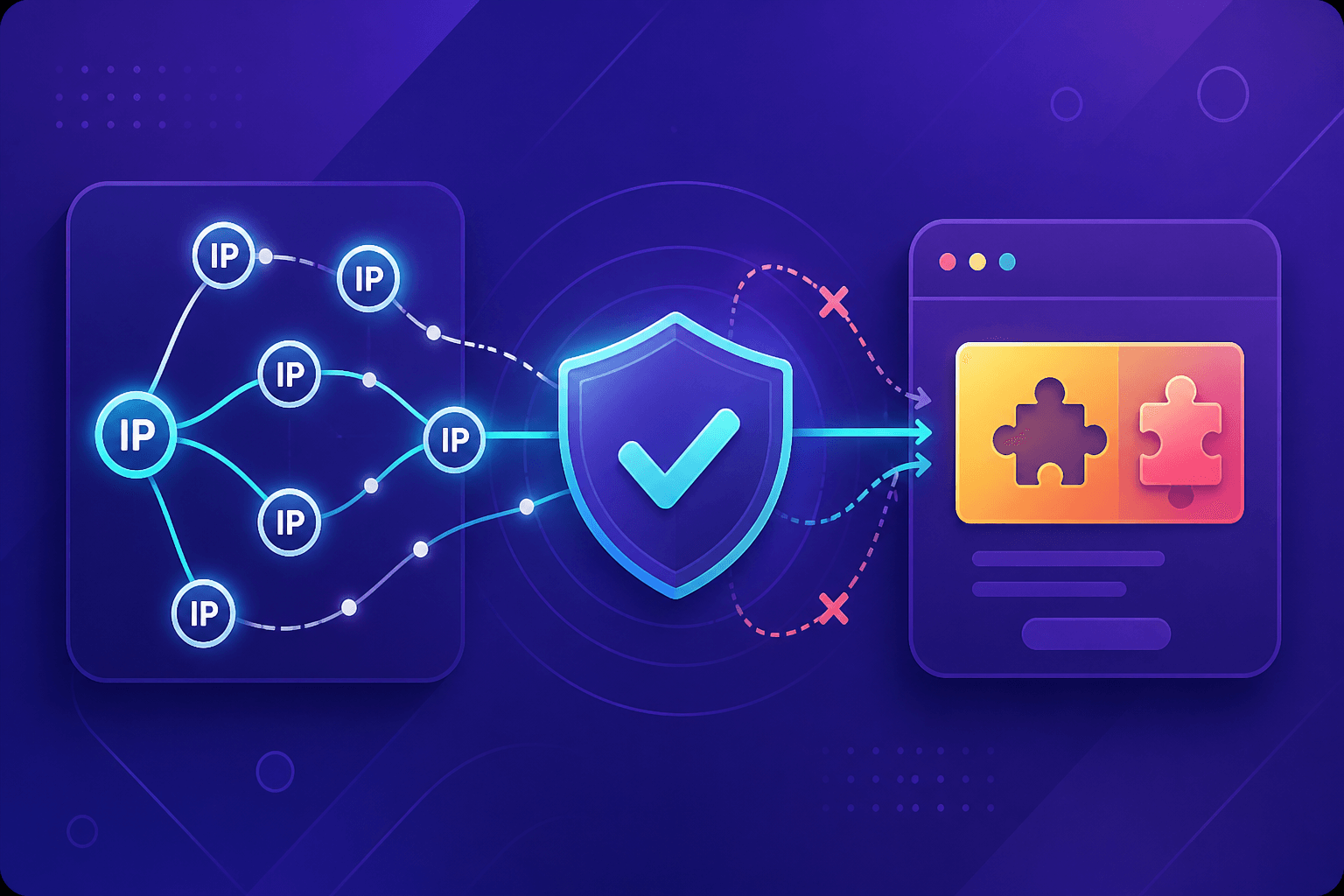
How a proxy works:
- Users send requests through the proxy.
- The proxy forwards the request to the target server, hiding the real IP address.
- The server sends data back through the proxy, which then delivers it to the users.
Advantages and Disadvantages
Shared proxies are a good solution for smaller tasks and cost savings. Let’s take a closer look at the main advantages and disadvantages of this technology:
Advantages
- Cost savings
This is the main advantage of shared proxies. They are cheaper because multiple users share the same IP address, splitting the cost. A great option if you want to save money.
- Anonymity
Your real IP address remains hidden, making your online activity more private. It also allows access to websites unavailable in certain countries.
- Simplicity
These proxies are very easy to set up and use, making them suitable for bypassing restrictions and basic web scraping.
- Versatility
A great choice for small projects where high speed is not critical and a unique IP is not required.
Disadvantages
- Sometimes slower connection
Since multiple users share one IP, connection speed may decrease, especially under heavy load.
- Risk of bans
If one user violates a website’s rules, the entire IP may be blocked, affecting everyone using it.
- Not suitable for critical tasks
Shared proxies are not the best option for payment systems, social media accounts, or other critical services, since you cannot control the proxy load, its condition, or who else is using the IP, making the connection less reliable.
When Can Shared Proxies Be Used?
Bypassing regional restrictions – accessing websites and services that are blocked in your country.
Anonymous browsing – hiding your real IP address while visiting websites.
Basic data collection – web scraping websites where high speed or unique IP addresses are not required.
Managing multiple accounts – working with multiple accounts on social media and other online services.
Price monitoring – tracking product prices in online stores across different countries.
How to Choose High-Quality Proxies
Choose reliable services with good reviews and transparent terms.
Choose proxies with the countries and regions you need.
Compatibility with your tasks: proxies should support the required protocols (HTTP(S), SOCKS5) and work with your services.
Compare the price with competitors, but it is best not to focus solely on the cheapest options, as this may affect quality.
Alternatives to Shared Proxies
If you are still unsure about your proxy choice, consider the following alternatives as well:
Dedicated proxies – one IP exclusively for you, offering more stability and a lower risk of bans. These proxies are more expensive.
VPN – a simple way to hide your IP, ideal for regular browsing, but not always suitable for large-scale tasks where high speed is required.
Cloud proxies – proxies hosted on cloud servers. Suitable for fast tasks and better control, but require technical skills.
In summary, shared proxies are an affordable solution for many tasks where speed and IP uniqueness are not critical. Despite some limitations, shared proxies remain an attractive option. They are suitable for users who need to handle standard tasks with minimal cost. At the same time, such proxies help avoid using free services, which often lack security and do not guarantee reliable performance.
NB: Please note that the product is intended for automating the testing of only your own websites and resources to which you have legal access rights.