Rotating Proxies and CAPTCHA Automation: A Practical Guide to Scraping at Scale Without Blocks
Any team that runs web scraping, price monitoring, ad verification, or account automation eventually hits the same two walls: CAPTCHAs and IP blocks. You send a burst of requests, the target flags the traffic, and every page turns into a challenge or a hard block. The fix is rarely a single trick. Resilient automation stands on two layers that work together: rotating proxies that control your network identity, and CAPTCHA automation that clears the challenges you still meet. This guide shows how to combine them – matching proxy type and rotation to the task, then handing CAPTCHAs to an automated solver – so your pipelines keep running as you scale.
Start with a low-cost test
Before wiring anything into production, validate both layers on a small budget:
CapMonster Cloud provides a $0.1 test balance on request to support, and ZennoPoster users receive 5,000 CAPTCHAs for testing.
Astro provides a $3 test credit, requested from the Astro Support Team, usable on any proxy configuration.
On the proxy side, the effective rate drops as volume grows: a bulk order discount up to 20% applies automatically at checkout, and a cumulative top-up discount up to 25% is based on your top-ups over a 30-day window. That lets you prove the workflow before you scale it.
Why automation triggers CAPTCHAs and blocks
Targets read your automation on two levels. The first is network identity – the IP address and how it behaves: what kind of connection it is, where it is located, and how often it changes. The second is behavior – request rate, timing, and the client fingerprint. When the network identity looks wrong for the visitor it claims to be, or when many requests share one address, anti-bot systems escalate: first a CAPTCHA, then rate limits, then a block.
No single tool removes both problems, which is why a durable setup uses two layers:
Rotating proxies reduce how often you are challenged by giving each request or session a clean, appropriate IP.
CAPTCHA automation clears the challenges that still appear, so a solved CAPTCHA never stops the run.
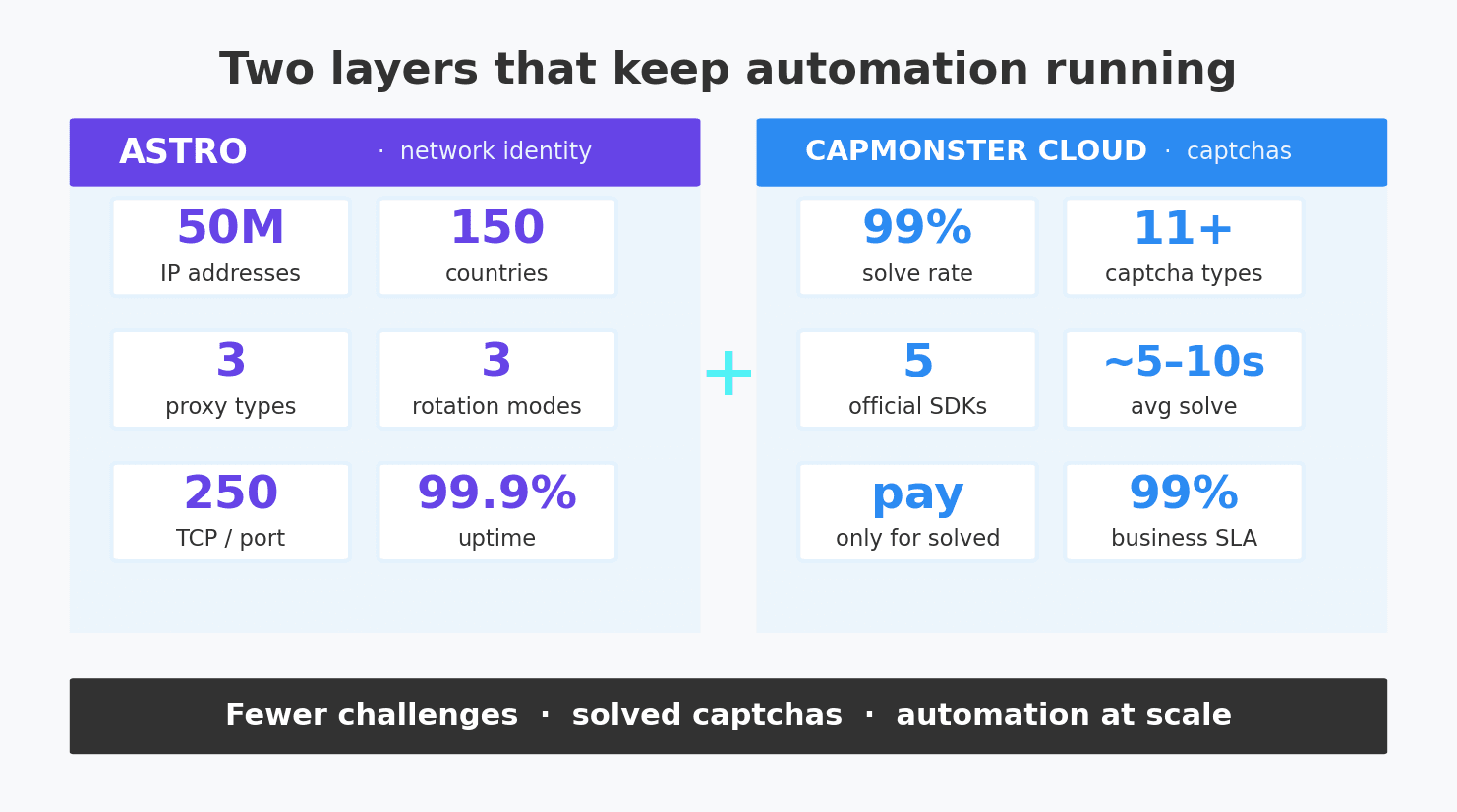
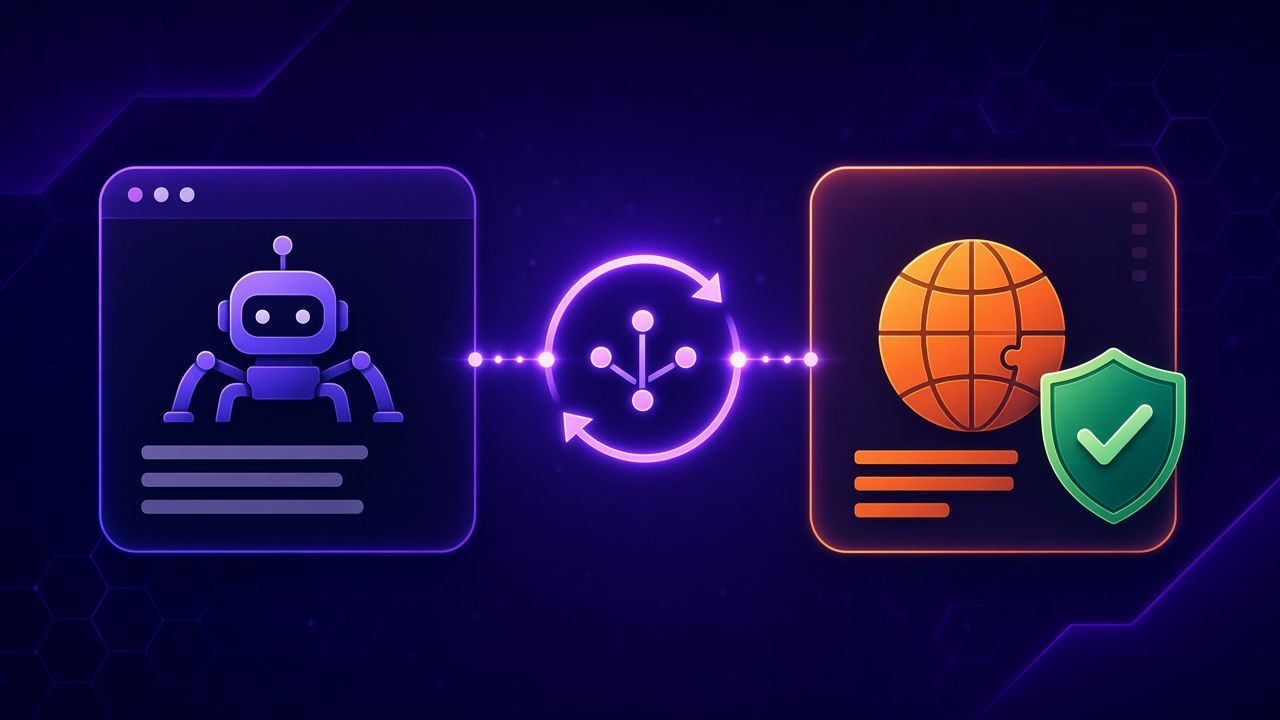
The two-layer model: Astro handles network identity, CapMonster Cloud handles CAPTCHAs.
Layer 1 – Rotating proxies with Astro infrastructure
Astro is a proxy infrastructure that supplies the network identity for each request and worker. It offers three proxy types, three rotation modes, and city- and provider-level targeting across a large pool of ethically sourced IPs.
Match the proxy type to the target
Residential proxies are addresses from real home internet connections. They earn high trust and are the everyday default for logged-in accounts and CAPTCHA-heavy targets.
Mobile proxies (4G/5G) carry the highest baseline trust, because carrier IPs are shared by many real subscribers. Use them for the strictest, mobile-first platforms and sensitive steps.
Datacenter proxies are the most economical option for large-volume public-data collection where trust requirements are lower.
Choose the rotation mode
The external proxy IP changes according to the selected mode:
On a timer.
A new IP address for each new connection.
Manual IP rotation via link or dashboard button.
In practice, timer intervals start from 1 minute, so for a steady session you can set the interval a little longer than a typical visit and keep one IP throughout. Rotating on every new connection suits stateless, high-volume collection, while manual control is best for logins and other sensitive steps. Each port supports up to 250 concurrent TCP connections, and one port serves only one user, which keeps sessions isolated.
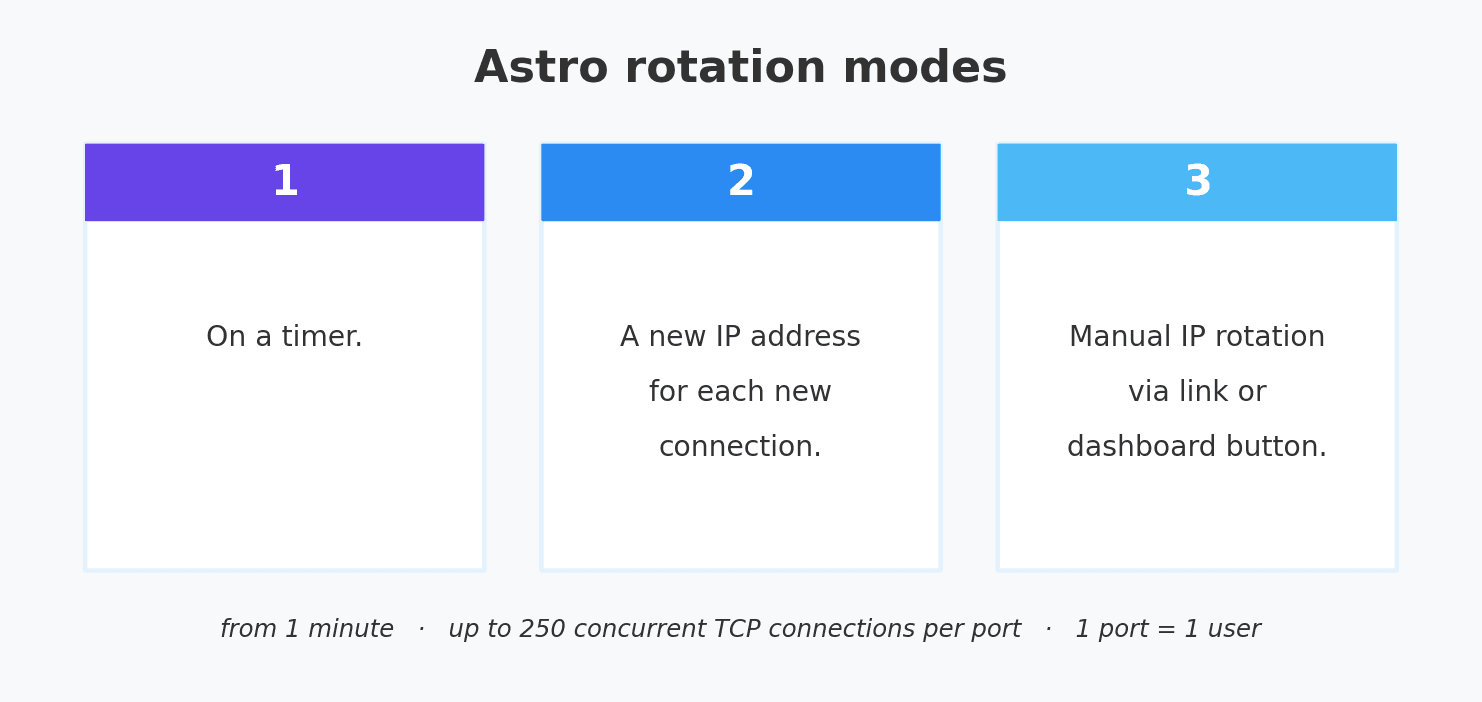
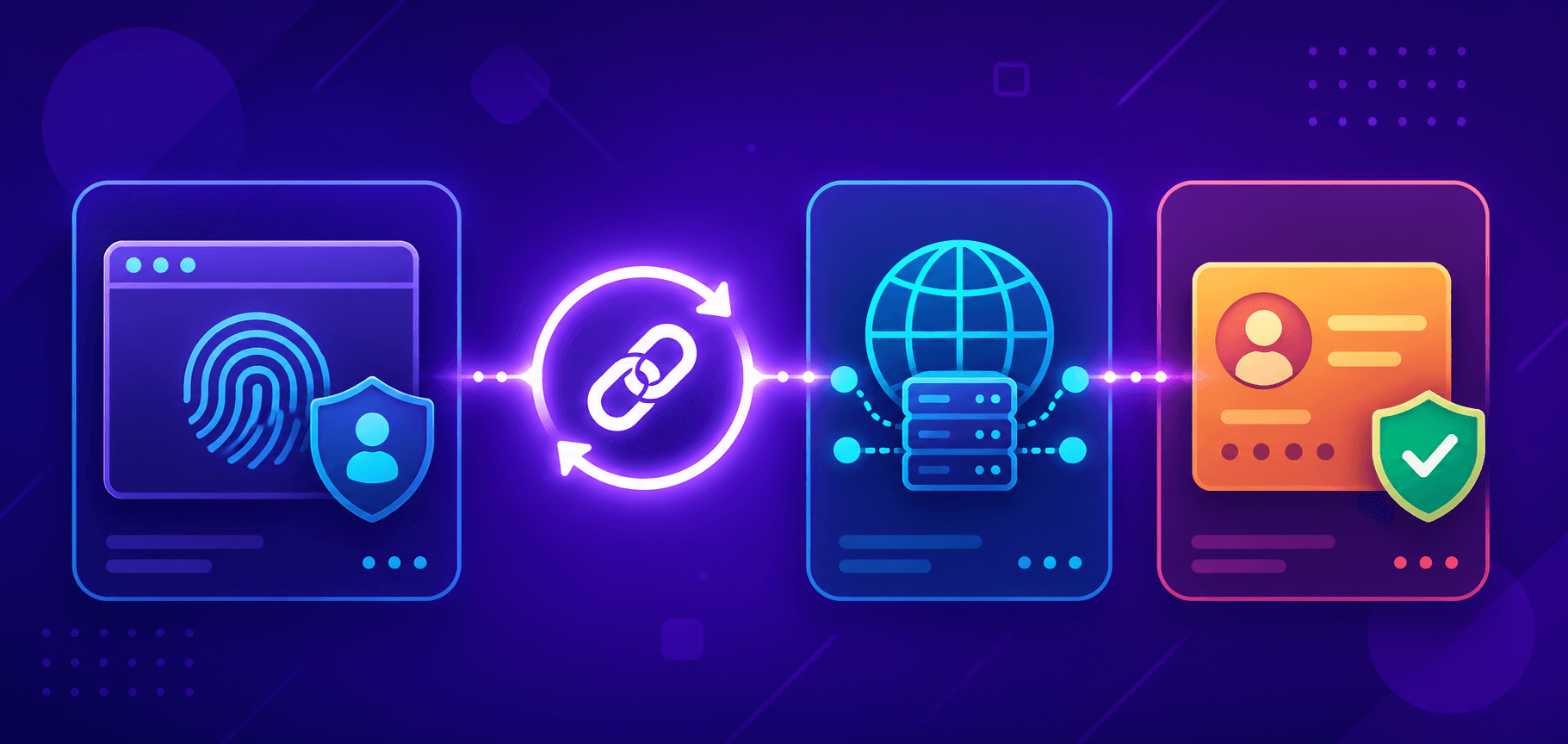
Three rotation modes, mapped to how you collect data or work with accounts.
Match the location to the target
Astro supports country-, city-, and provider-level targeting, so a request resolves where the account or market expects it. Provider-level targeting is the context in which the ISP matters – it lets regional accounts and local checks look native to the target.
Layer 2 – CAPTCHA automation with CapMonster Cloud
Even with clean IPs, some targets still present a CAPTCHA, and that is where an automated solver keeps the pipeline moving. CapMonster Cloud is an AI-powered CAPTCHA solver built for scale, with a simple JSON API and official SDKs for C#, Python, JavaScript, Go, and PHP. It recognizes a wide range of CAPTCHA types – including reCAPTCHA v2 and v3 (and Enterprise), Cloudflare Turnstile and Challenge, GeeTest, Amazon AWS WAF, Tencent, Yidun, and text and image CAPTCHAs – with success rates up to 99%.
The flow is simple to drop into an existing scraper:
Your scraper sends a task object (target URL, sitekey, and options) to the CapMonster Cloud API.
The service solves the CAPTCHA and returns a token or text answer.
You submit that answer to the target and continue the session.
You pay only for successfully solved CAPTCHAs, and browser extensions for Chrome and Firefox can solve challenges in the background for lighter workflows. Full task types and code examples are in the CapMonster Cloud Documintatyion.
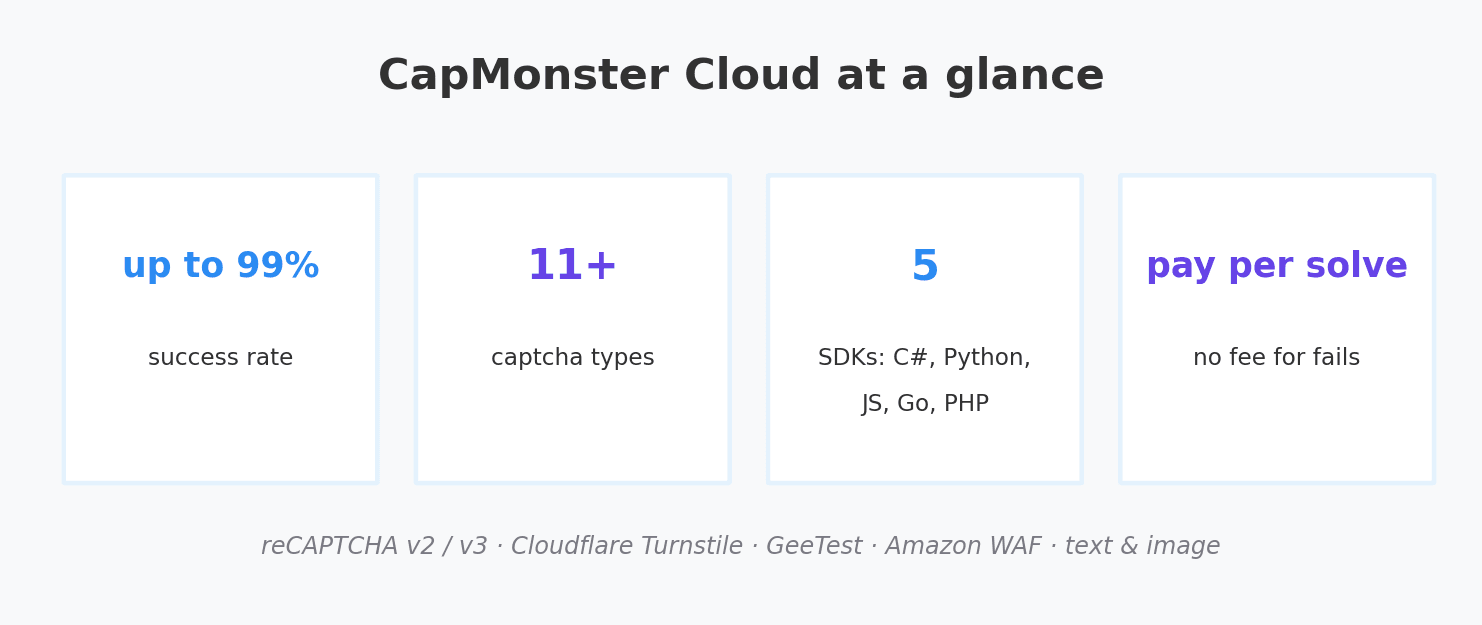
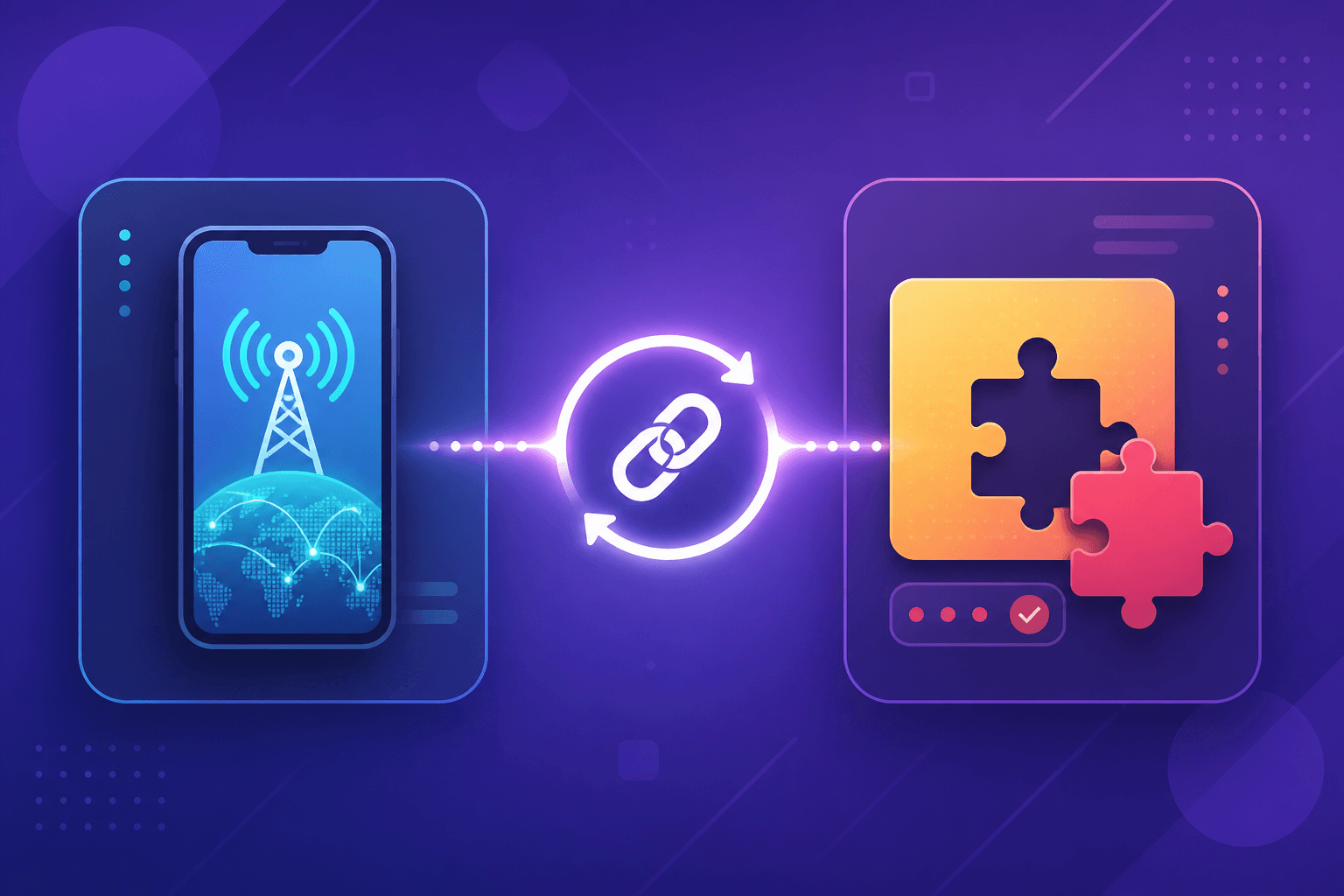
CapMonster Cloud in numbers: solve rate, supported types, SDKs, and pay-per-solve billing.
A resilient workflow, step by step
Put the two layers into one loop:
Pick the proxy type for the target – residential or mobile for logged-in and strict platforms, datacenter for large-volume public data.
Set the rotation mode to fit the task – a timer for steady sessions, a fresh IP on each connection for stateless collection, or manual rotation for logins.
Route each worker through Astro over HTTP(S) or SOCKS5, one port per session, with city- or provider-level targeting matched to the account.
On a CAPTCHA, send the task to CapMonster Cloud, get the token, submit it, and resume the session.
Keep the client consistent – timezone, language, and WebRTC aligned with the proxy IP – so a solved CAPTCHA is not undone by a mismatch.
This pattern keeps request volume distributed, challenges handled, and sessions coherent, which is what keeps large runs alive.
Common mistakes that still get you blocked
One IP shared by many logged-in accounts – one of the surest ways to link a whole cluster together.
A new IP mid-session on a logged-in account, which breaks the session and looks unnatural.
Datacenter IPs on strict, login-based or mobile-first platforms.
A timezone or language that does not match the IP.
WebRTC leaks: make sure the browser uses the proxy IP, and do not disable WebRTC entirely, because a missing WebRTC value is itself a signal that anti-fraud systems read.
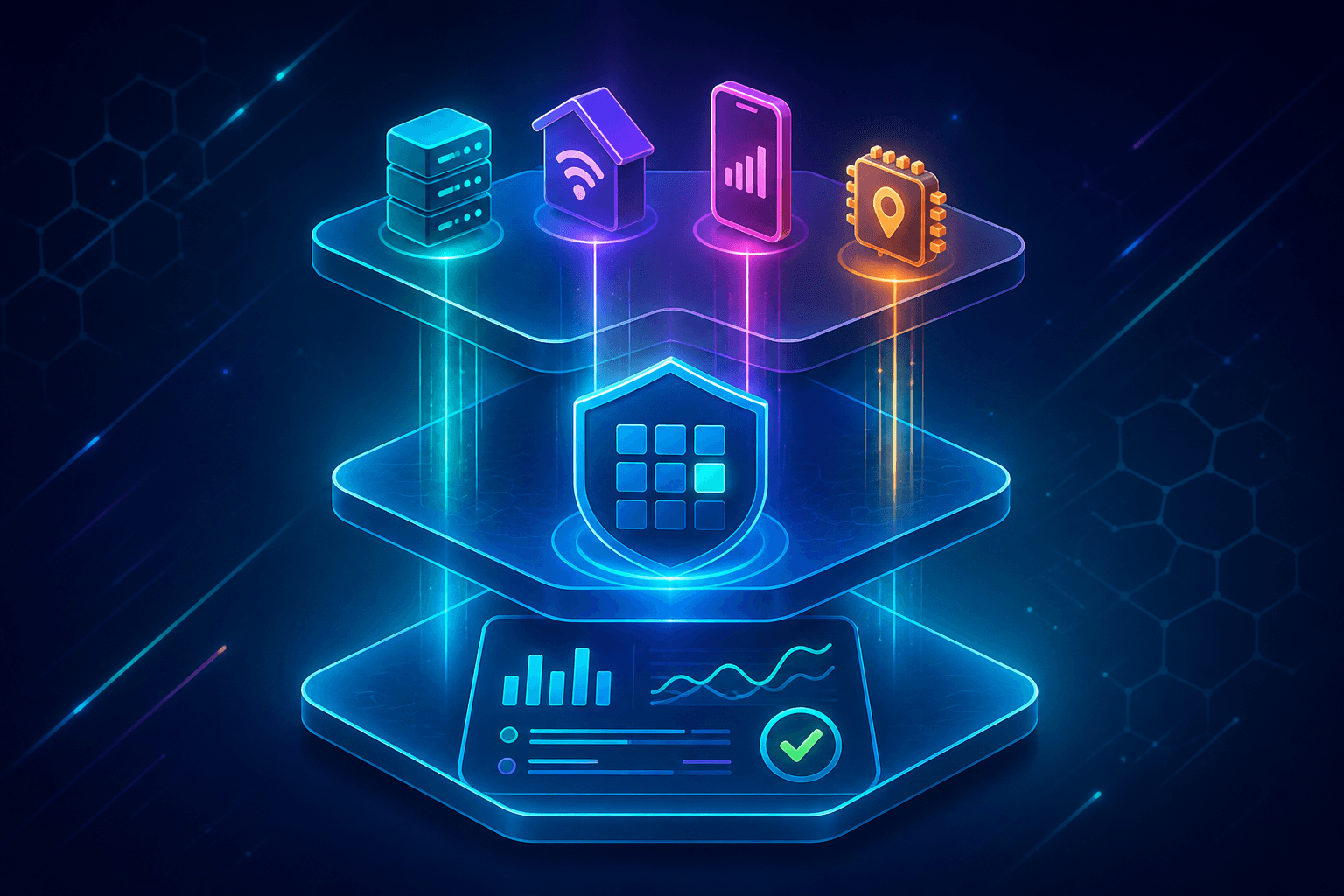
Astro infrastructure at a glance
Pool: 50M IPs across 150 countries – residential, mobile (4G/5G), and datacenter.
Sourcing: collected with users’ consent and verified under KYC and AML.
Protocols: HTTP(S) and SOCKS5.
Throughput: up to 250 concurrent TCP connections per port at 99.9% uptime.
Targeting: city and provider level.
Rotation: on a timer, a new IP address for each new connection, or manual IP rotation via link or dashboard button.
FAQ

Bringing it together
Rotating proxies keep you under the radar, and CAPTCHA automation clears what remains. Build both into one loop – Astro infrastructure for the network layer, CapMonster Cloud for CAPTCHAs – and your automation keeps running as request volume grows.