Leading Global Data Center Providers and the Best Colocation Services: Expert Review 2025
In the digital race of 2025, companies are strategically choosing between hyperscale clouds and smart colocation deployments to maintain flexibility, control, and proximity to markets. Selecting the best colocation services and top global data center providers has become critical to supporting data-intensive, latency-sensitive, and AI-driven workloads worldwide.

What Colocation Services Are and Why Companies Need Them
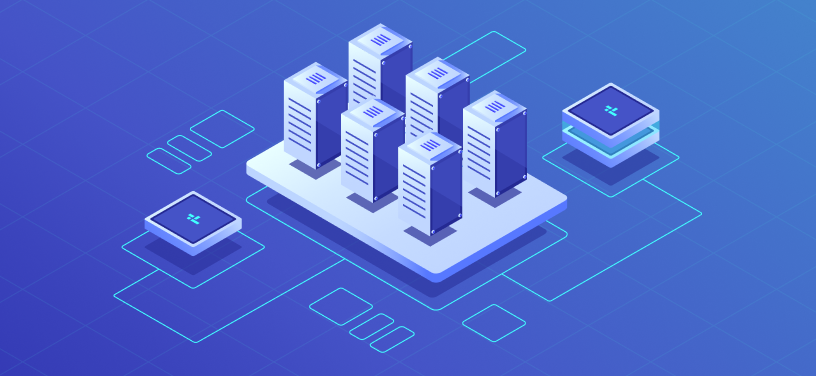
Colocation (from the English co-location) is a data center service in which a company rents physical space — typically racks, cages, or private suites — in a third-party data center to host its own IT equipment. Unlike cloud services, where infrastructure is virtualized, colocation gives companies direct control over their servers and networking hardware while eliminating the need to build and operate their own highly available and secure data center.
Companies choose colocation to:
Reduce capital expenditures (CapEx) while gaining access to Tier III/IV infrastructure.
Ensure low-latency connectivity with carriers, IXPs, and cloud providers.
Comply with industry standards (PCI, HIPAA, SOC2) through certified data centers.
Combine on-premises control with the flexibility of a hybrid cloud.
Gain 24/7 availability, scalable power capacity (20–40 kW per rack), and physical security without operating their own data center.
Global Market and Growth Rates
The global colocation market is valued at $68 billion in 2024 and is projected to reach $92 billion by 2027 with a CAGR of 10.6% (Synergy Research). APAC is the fastest-growing region (12–13%), driven by AI, gaming, and fintech expansion in Singapore, India, and Hong Kong. The U.S. remains the largest market (~45% of total capacity), followed by Europe (~28%). Since 2021, more than $48 billion in M&A deals have been recorded as providers expand their geographic footprint and capacity.
Key Factors When Choosing the Best Colocation Services
Location and Connectivity
Carrier-neutral facilities with rich interconnection ecosystems (Equinix, Digital Realty) provide direct connectivity to major clouds, internet providers, and IXPs. Strategic proximity reduces latency and ensures compliance with local data regulations.
Power and Energy Efficiency
Modern workloads (AI training clusters, GPUs, HPC) require high-density racks (20–40 kW and above). Advanced data centers deliver PUE <1.3, hot/cold aisle containment, and liquid cooling to manage thermal loads.
Compliance Standards and Tier Reliability
Reputable providers offer Tier III/IV facilities with 99.999% uptime, backed by certifications such as ISO 27001, PCI-DSS, SOC 2, and HIPAA. Access control systems include 24/7 biometric verification, mantraps, and redundant power (N+1/N+N).
Scalability and Service Ecosystem
Clients can start with a single rack and scale to private suites or dedicated halls, often supported by API-based interconnection, remote hands services, and cross-connects with predictable SLAs.
Top Global Data Center Providers
Equinix
250+ IBX® sites in 32 countries, ultra-low latency via Equinix Fabric to 2,000+ networks and clouds. PUE 1.18–1.29. Key hubs: Ashburn, Frankfurt, Singapore, Tokyo.
Digital Realty
300+ facilities across six continents, densities up to 30 kW per rack, annual revenue of $4.7 billion (2024). Focus on hyperscalers, hybrid cloud, and sustainability.
NTT Global Data Centers
Presence in 20+ countries, Tier IV facilities for mission-critical workloads in fintech, telecom, and gaming. Investments in liquid cooling and 100% renewable energy by 2030.
Iron Mountain
Specializes in ultra-secure colocation with underground bunker facilities and strict compliance requirements (finance, healthcare, government). Actively expanding in Phoenix, Frankfurt, and Mumbai.
Cyxtera / Evoque / Flexential
U.S.-focused, mid-market, edge, and managed services. Cyxtera offers AI-ready PODs, Evoque supports AWS Outposts, Flexential tests 40 kW liquid-cooled racks for AI/ML.
Telehouse (KDDI)
European hub in London Docklands, one of the largest IXs, strategic hubs in Paris, Frankfurt, and Tokyo.
China Telecom Global / GDS
Licensed providers in China offering compliant hosting with low latency to Tencent, Alibaba, and Baidu. Key partners for Western companies with local data residency requirements.
Industry Use Cases
Financial companies — ultra-low latency for trading and AML.
Healthcare — genomics processing, PACS, EHR with HIPAA-compliant security.
Gaming and media — edge colocation for rendering and multiplayer.
SaaS — AI pipelines on GPUs.
Government entities — storage of surveillance data and archiving in Tier IV facilities with long-term support.
CapMonster Cloud can be particularly useful for companies and researchers working with large volumes of open data and task automation within digital infrastructure. Using this tool makes it possible to accelerate information collection, conduct load testing, or monitor services without overloading internal resources.
At the same time, it is крайне important to use CapMonster Cloud ethically: only for legal, transparent scenarios, complying with access rules and data confidentiality requirements. Ethical use ensures compliance with laws, protection of the company’s reputation, and customer trust.
Emerging Trends Reshaping the Market
AI-native: liquid cooling for NVIDIA HGX/DGX, 40–50 kW+ per rack.
Decarbonization: PPAs, renewable energy sources, ESG metrics.
Interconnection 2.0: SDN-controlled cross-connects via API.
Edge Micro-DCs: colocation at base stations and 5G points.
Outlook for 2025–2030
By 2030, colocation will become the foundation of global digital infrastructure, integrating public clouds, sovereign computing zones, and latency-critical edge workloads. Rack density will exceed 60 kW, and immersion-cooled GPU clusters will become the standard for AI and industrial IoT. High-growth regions: India, Indonesia, Brazil, Saudi Arabia, driven by investments from hyperscalers and sovereign funds. Enterprise clients will select providers offering API automation, transparent sustainability reporting, and unified SLAs across multiple regions, reinforcing the status of top data center providers as long-term digital infrastructure partners in the hybrid era.
NB: Please note that the product is intended for automating testing exclusively of your own websites and resources to which you have a legal right of access.